


What Makes Asset Management Critical in Luxury Hotels?
In premium hotels and resorts, assets are not interchangeable. Every item—FF&E, smart room technology, spa equipment, or kitchen system—is carefully selected, specified, and positioned with precision.
Yet many luxury properties still rely on spreadsheets, handover binders, and basic accounting tools—systems never designed for five-star operational complexity. The result:
Rising maintenance and replacement costs
Inconsistent room and suite standards
Limited visibility across multiple properties
Delayed openings and guest dissatisfaction
Luxury demands consistency, and consistency requires control.
From Asset Lists to Asset Intelligence
Different teams manage assets through different lenses:
Design & Procurement: specifications and deliveries
Operations: room readiness and presentation
Engineering: performance and maintenance
Finance: asset value and depreciation
Without a unified system, asset intelligence remains fragmented—especially across multiple hotels, brands, and regions.
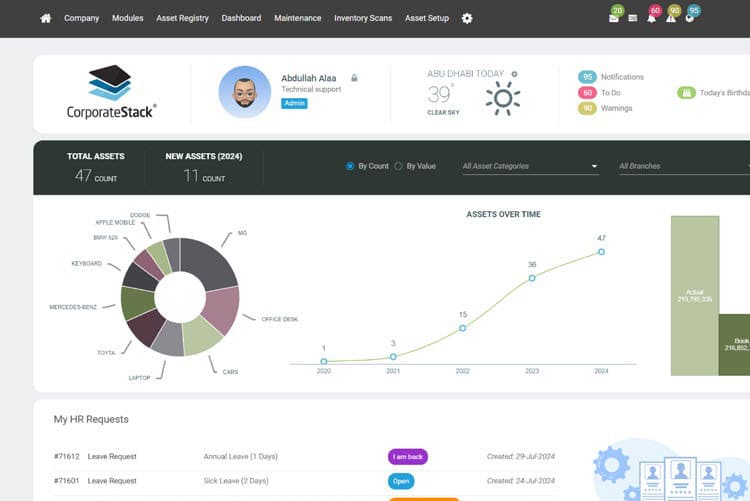
The End-to-End Asset Management System for Luxury Hospitality
Phase 1: Asset Arrival & Precision Registration
As assets arrive on-site, each one is:
Registered at receipt
Tagged and linked to its exact location (room, suite, spa, lobby, restaurant, or outdoor facility)
Categorized by type, brand, vendor, warranty, and service requirements
Result: Every asset is traceable, accountable, and tied directly to the guest experience.
Phase 2: Room, Suite & Area Readiness
Assets progress through readiness stages:
Delivered
Installed
Tested
Guest-ready
Rooms and public areas are validated against brand standards—not subjective checklists.
Result: Real-time visibility into guest-ready rooms, suites needing attention, and compliant public spaces—without manual inspections.
Phase 3: Service, Maintenance & Brand Protection
Once operational, the system enables:
Preventive maintenance scheduling
Centralized warranty and service tracking
Alerts for high-risk or high-failure assets
Result: Fewer disruptions, protected luxury standards, and extended asset life cycles.
Phase 4: Financial Governance & Multi-Property Visibility
Asset intelligence supports strategic decision-making by:
Aligning asset values with physical existence
Informing renovation and refurbishment planning
Providing portfolio-wide visibility across properties, brands, and regions
Result: Accurate financial reporting, optimized capital planning, and consistent standards at scale.
The Outcome: Luxury Operations in Complete Control
What was once complex and fragmented becomes structured, predictable, and scalable.
Business value delivered:
Consistent luxury standards across rooms and properties
Full visibility into FF&E and high-value assets
Reduced guest complaints and service disruptions
Optimized maintenance and replacement cycles
A scalable foundation for hotel chains and resort groups


Why Asset Intelligence Defines Modern Luxury Hospitality
Luxury is defined by detail, trust, and consistency.
Asset intelligence ensures that:
Every room delivers the same experience—every time
Every shared space reflects the brand promise
Every investment is protected and optimized
In luxury hospitality, assets are not background elements.
They are part of the story your guests experience—and managing them intelligently is how brands scale with confidence.